If you have been searching for a property market that combines high rental income, zero taxes, and long-term capital growth in a single location.
According to data from the Dubai Land Department, property sales in Dubai reachedAED 682.49 billion in 2025, the highest annual sales figure in the emirate’s history, up30.64% year on year.(Source: Dubai Land Department)
In this guide, we break down exactly why to invest in Dubai real estate, which areas are delivering the strongest returns in 2026, what ROI actually looks like after costs, and how foreign investors can get started. If you want structured, investor-focused guidance on the right opportunities for your goals, Blueline Properties Co. works with investors at every stage of the process.
Is Dubai Real Estate a Good Investment in 2026?
Dubai real estate continues to attract investors in 2026 due to factors such as rental demand, ownership options, infrastructure development, and market activity. However, investment outcomes depend on choosing the right strategy, location, and property type.
Dubai’s real estate market in 2026 is entering a mature growth phase, supported by population growth, business migration, tourism demand, and continued infrastructure investment. Total real estate transactions in Dubai reachedAED 917 billion in 2025, with around270,000 transactions recorded, marking approximately20% year-on-year growth and the highest level in the sector’s history.(Source: Dubai Government Media Office)
For investors, this matters because market depth and liquidity directly impact your ability to rent, sell, and exit a property. Dubai now has both.
Why Invest in Dubai Real Estate? 6 Core Reasons
Dubai’s tax environment is one of its attractions for international property investors. The UAE generally does not impose personal income tax on individuals, and Dubai does not levy an annual residential property tax comparable to those found in many international markets.
However, investors may still incur transaction costs, service charges and other property-related fees, while tax obligations may also arise in their country of tax residence. Investors should obtain professional tax advice based on their individual circumstances.
1. Zero Tax Environment
One of Dubai’s key advantages is its tax structure compared with many international property markets.
- Zero annual property tax
- Zero capital gains tax on property sales
- Zero income tax on rental earnings
One of the biggest advantages of investing in Dubai real estate is its favorable tax environment, which is one of the factors attracting international investors to the UAE property market.
To put this in context: in the UK, a higher-rate taxpayer pays up to 40% income tax on rental profits. In the US, capital gains tax can reach 30% or higher. In Dubai, none of these apply.
2. Rental Yields That Outperform Major Global Cities
Dubai rental yields remain attractive for investors, with several communities commonly highlighted for their rental return potential. Market reports indicate areas such as International City, Dubai Sports City, Dubai South, Al Furjan, Dubai Silicon Oasis, Jumeirah Lakes Towers, and Jumeirah Village Circle offer competitive gross rental yields depending on property type, location, and market conditions.(Source: Bayut Dubai Rental Market Reports)
Gross rental yields vary considerably by community, property type, purchase price, unit size, and market conditions. Certain mid-market communities can offer higher gross yields, while prime luxury areas typically trade some rental yield for location and capital-appreciation potential.
3. UAE Residency Opportunities
Property investment in Dubai may open pathways to long-term UAE residency, depending on the investment value and current government eligibility requirements. Investors should verify the latest criteria directly with the UAE government or a registered real estate advisor, as thresholds and conditions can change.
4. 100% Foreign Ownership in Freehold Zones
Foreign nationals can own property outright in Dubai’s designated freehold areas without requiring a local partner or shareholding arrangement. This provides international investors with greater control and flexibility compared with many other Gulf and Asian property markets.
For guidance on accessing Dubai’s property market as a foreign investor, explore Dubai property investment opportunities with Blueline Properties Co.
5. Safety, Legal Framework, and Regulatory Transparency
Dubai’s real estate sector is regulated by the Dubai Land Department (DLD) and RERA (Real Estate Regulatory Agency), providing investors with clear ownership rights, escrow protections on off-plan purchases, and dispute resolution mechanisms. Dubai consistently ranks as one of the safest cities globally, which directly supports stable tenant demand and low vacancy risk for landlords.
6. USD-Pegged Currency
The UAE Dirham is pegged to the US dollar, eliminating currency risk for USD-denominated investors and providing additional stability for those pricing in euros or other currencies with USD correlations.
Dubai Real Estate ROI: What Do the Numbers Actually Look Like?
Understanding the difference between gross yield and net yield is essential before making any investment decision.
- Gross yield is the rental income divided by the purchase price, the number most commonly quoted.
- Net yield accounts for service charges, property management fees, vacancy periods, and maintenance costs. Net yields after these costs typically run 1.5 to 3 percentage points lower than gross figures.
Dubai vs Other Global Property Markets (2026)
| City | Average Gross Rental Yield |
|---|---|
| Dubai (mid-market) | 6.5% – 9%+ |
| London | 3% – 4% |
| New York | 2.5% – 3.5% |
| Singapore | 3% – 4% |
| Hong Kong | 2% – 3% |
Combined with zero local tax friction, the net returns to Dubai investors are exceptionally competitive on a global basis. For investors, this means rental income from a Dubai property arrives without local tax friction, though home-country tax obligations still apply based on tax residency, so working with a cross-border tax advisor is always recommended.
Why Investors Choose Dubai Over Other Global Markets
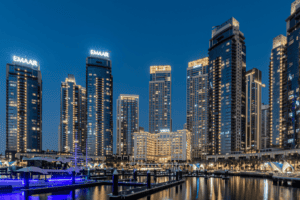
Many investors searching “why invest in Dubai real estate” are actively comparing Dubai against London, Singapore, New York, and other established markets. Here is how Dubai compares across the factors that matter most:
- Lower tax burden: Unlike the UK, the US, or Australia, Dubai applies no income tax, capital gains tax, or annual property tax. This alone can increase effective returns by several percentage points annually.
- Higher rental potential: Dubai rental yields typically sit around 7 to 9%, depending on the area, outperforming cities like New York at approximately 3% and London at approximately 4%.
- Growing population and tenant demand: Dubai’s growing population continues to support residential demand, with the emirate’s population reaching more than4.5 million by the end of 2025.(Source: Dubai Digital / Dubai Data and Statistics Establishment)
- Foreign ownership rights: Full freehold ownership in designated zones removes the complexity that exists in markets like Thailand, Malaysia, or other GCC countries.
- Lifestyle demand: Dubai’s global connectivity, safety, English-language environment, and world-class infrastructure continue to attract high-income expatriate tenants, which directly supports occupancy rates and rental pricing.
Best Areas to Invest in Dubai (Based on Your Goal)
Not all Dubai areas perform the same way. The right area depends entirely on whether your priority is rental income, capital appreciation, or a balance of both. Blueline Properties Co. provides property investment guidance and handles transactions as a licensed Dubai brokerage through authorized channels.
Highest Rental Income
These areas are ideal for investors seeking stronger rental returns, supported by affordable prices and consistent tenant demand.
Jumeirah Village Circle (JVC)
JVC leads Dubai in 2026 with strong rental yield potential, supported by affordable entry prices and consistent tenant demand from young professionals and families. Its accessibility and growing community infrastructure make it one of the most attractive options for investors seeking rental income. Gross rental yields are commonly reported in the 7% to 11% range depending on unit type.(Source: GuestReady)
Investors exploring apartment investment opportunities in the UAE can consider JVC and other high-demand communities based on their investment goals.
International City & Dubai Silicon Oasis
These communities consistently attract investors looking for higher rental returns due to affordable property prices and strong tenant demand. Their lower entry costs compared with premium areas make them popular choices for yield-focused investors.
Dubai Sports City
Dubai Sports City is a popular choice for yield-focused investors due to its affordable property prices, established community facilities, and consistent rental demand. Its competitive entry prices make it an attractive option for investors looking to achieve strong rental returns.
Lifestyle & Capital Growth
These areas attract investors seeking premium locations, strong demand, and long-term property value growth.
Dubai Marina
Dubai Marina offers a strong mix of rental demand, waterfront lifestyle, and connectivity, making it a popular choice for investors seeking both income and growth.Explore waterfront community investment opportunities across Dubai and the UAE.
Downtown Dubai
Downtown Dubai attracts high-income tenants and investors focused on long-term appreciation due to its prime location and global appeal.
Palm Jumeirah
Palm Jumeirah is a luxury investment destination where limited supply and premium demand support long-term capital growth.
Balance of Both
Business Bay delivers gross yields of6 to 8% with a central location near Downtown Dubai, benefiting from infrastructure upgrades and strong professional demand. It is widely considered the balanced choice for investors who want decent income without sacrificing appreciation potential.
Long-Term Family Investment
Dubai Hills Estate is a fully master-planned community with schools, parks, and a golf course. Arabian Ranches and Tilal Al Ghaf are also emerging as strongvilla investment options for investors targeting family-oriented tenants and long-term capital growth.
Future Growth Areas
These emerging communities appeal to investors looking for lower entry prices and long-term appreciation potential as infrastructure and demand continue to develop.
- Arjan: A growing community with affordable property options and increasing demand from residents seeking well-connected Dubai locations.
- MBR City: A premium developing area with strong future potential due to planned communities, lifestyle amenities, and strategic location.
- Dubai South: An emerging investment hub benefiting from airport expansion, Expo City, and ongoing infrastructure development.
Off-Plan vs. Ready Property: Which Gives Better ROI?

Both strategies have merit depending on your timeline and risk tolerance. Blueline Properties Co. specialises in curatedoff-plan investment opportunities across Dubai and the wider UAE, with flexible developer payment plans.
Off-plan property:
- Lower entry prices, often with flexible developer payment plans
- Higher potential appreciation from purchase to completion
- No immediate rental income until handover
- Construction and delivery risk exists; always verify RERA escrow registration
Ready property:
- Immediate rental income from day one
- No construction risk
- Higher entry price relative to off-plan equivalents
- Furnishing a ready unit strategically can improve rental appeal and help attract different tenant segments depending on location and demand.
For investors prioritizing immediate rental income, ready property may offer a more straightforward starting point because the asset is complete and can potentially generate income immediately.
View available off-plan properties in the UAE orexplore payment plans currently available through Blueline Properties Co.’s developer network.
Dubai Property Market 2026: Key Trends
Dubai enters 2026 with high transaction volumes, strong rental absorption, and a supply pipeline weighted toward future delivery rather than immediate completion. Market conditions remain supported by population growth, infrastructure investment, and regulatory transparency.
Key trends shaping the market this year:
- Off-plan dominance: Flexible payment plans and lower entry prices are making off-plan projects increasingly popular among international investors
- Short-term rental growth: Platforms like Airbnb continue to drive demand for furnished apartments in Marina, Downtown, and JBR
- Normalization, not downturn: This is healthy normalization; demand fundamentals, including population growth, tourism growth, and business migration, remain strong, and supply absorption has kept pace with delivery.
- Dubai Real Estate Strategy 2033: The government has set a target of AED 1 trillion in annual transactions by 2033, signalling continued long-term policy support for the sector (Source: Dubai Land Department)
How Foreign Investors Buy Property in Dubai
The process is more straightforward than most first-time buyers expect.
- Define your goal and budget: income focus, capital growth, or both
- Choose your area based on your strategy, yield, appreciation, or lifestyle. Read ourUAE real estate investment guide for a structured breakdown
- Work with a RERA-registered agent:registration is verifiable on the DLD website
- Sign the MOU (Memorandum of Understanding) with the seller
- Pay the 4% DLD transfer fee, plus standard agency and admin fees
- Receive your title deed: you are the legal owner
- Apply for relevant residency: if eligible based on investment value and current government requirements
For off-plan purchases, also verify that the developer’s project is registered with RERA and that funds are held in an escrow account.
Common Mistakes to Avoid
A successful Dubai property investment requires more than choosing a popular area. Avoiding common mistakes can help protect your returns and make better investment decisions.
- Relying on gross yield alone. Always calculate net yield after service charges, management fees, and vacancy allowances. Gross yield alone can overstate an investor’s actual return because it excludes recurring ownership and operating costs; it ignores the costs that determine your actual profit.
- Ignoring service charges. In some buildings, particularly in premium areas, annual service charges can materially reduce net returns.
- Buying in oversupplied micro-markets. Even within high-performing areas, individual buildings and tower clusters can experience oversupply, which softens rents and yields.
- Skipping RERA verification on off-plan. Always confirm the project is RERA-registered and that an escrow account is in place before committing funds.
- Overlooking your home country tax obligations. Zero tax in Dubai does not mean zero tax globally. Always work with a qualified advisor in your country of tax residency.
Is Dubai Real Estate Worth It in 2026?
For investors who understand the market and approach it with a clear strategy, Dubai continues to offer a compelling combination that is genuinely hard to find in a single market elsewhere: tax-free income, rental yields well above global averages, full foreign ownership rights, a stable and regulated legal framework, and a growing population driving sustained tenant demand.
The key is matching the right area and property type to your specific goal, whether that is maximum rental income from JVC or Dubai Silicon Oasis, balanced returns from Business Bay or Dubai Marina, long-term capital growth from Downtown or Dubai Hills, or a trophy asset on the Palm. Getting that match right from the start is what separates investors who consistently perform from those who buy based on headlines.
At Blueline Properties Co., we help investors identify the right opportunity in Dubai’s property market based on their goals, budget, and timeline, not just what is easiest to sell. Whether you are buying your first Dubai property or expanding an existing portfolio, our team provides straightforward, data-backed guidance as a licensed real estate brokerage in Dubai.
Explore Dubai property investment opportunities →
FAQs
- What is the average ROI on Dubai property in 2026?
Average gross rental yields range from 5% to 9% depending on area and property type. Mid-market areas like JVC and Dubai Silicon Oasis typically deliver the strongest yields, while Downtown and Palm Jumeirah offer lower yields but stronger capital growth. - Can foreigners buy property in Dubai?
Yes. Foreign nationals can purchase property outright in Dubai’s designated freehold zones with full ownership rights and no local partner required. - What is the minimum investment to buy property in Dubai?
Entry-level property opportunities vary depending on the area, property type, project, and market conditions. Investors should evaluate options based on their budget and investment goals. - Is Dubai property completely tax-free?
Dubai does not impose personal income tax or capital gains tax on individuals, and residential property ownership does not involve an annual property tax similar to some international markets. - Which Dubai areas can offer attractive rental yields?
International City, Dubai South, and JVC consistently rank highest, with gross yields of 7% to 9% for well-selected apartments. - How long does it take to buy property in Dubai as a foreigner?
The timeframe varies depending on whether the property is ready or off-plan, whether financing is involved, and the documentation and transfer process. A straightforward cash purchase of a ready property may complete considerably faster than a financed transaction.